Your Right to Challenge Your Property's Value
Learn what a Texas property tax protest is, who can file one, what outcomes are possible, and why protesting can't increase your taxes.

Every year, Texas homeowners have the right to challenge what the appraisal district says their property is worth. It's called a property tax protest—and it could mean significant savings on your tax bill.
A property tax protest is a formal process that allows Texas property owners to challenge the appraised value of their property as determined by the County Appraisal District (CAD). If successful, a protest results in a lower appraised value—which means lower property taxes.
This right exists because the mass appraisal methods used by appraisal districts aren't perfect. When valuing hundreds of thousands of properties, errors happen. Values may not account for property condition issues, may use incorrect property characteristics, or may not reflect current market conditions accurately. The protest system provides a check on this process, giving property owners a way to present evidence that their property's value should be lower.
What You're Actually Protesting
When you file a property tax protest, you're challenging the County Appraisal District's determination of your property's value—not the tax rate.
The key difference:
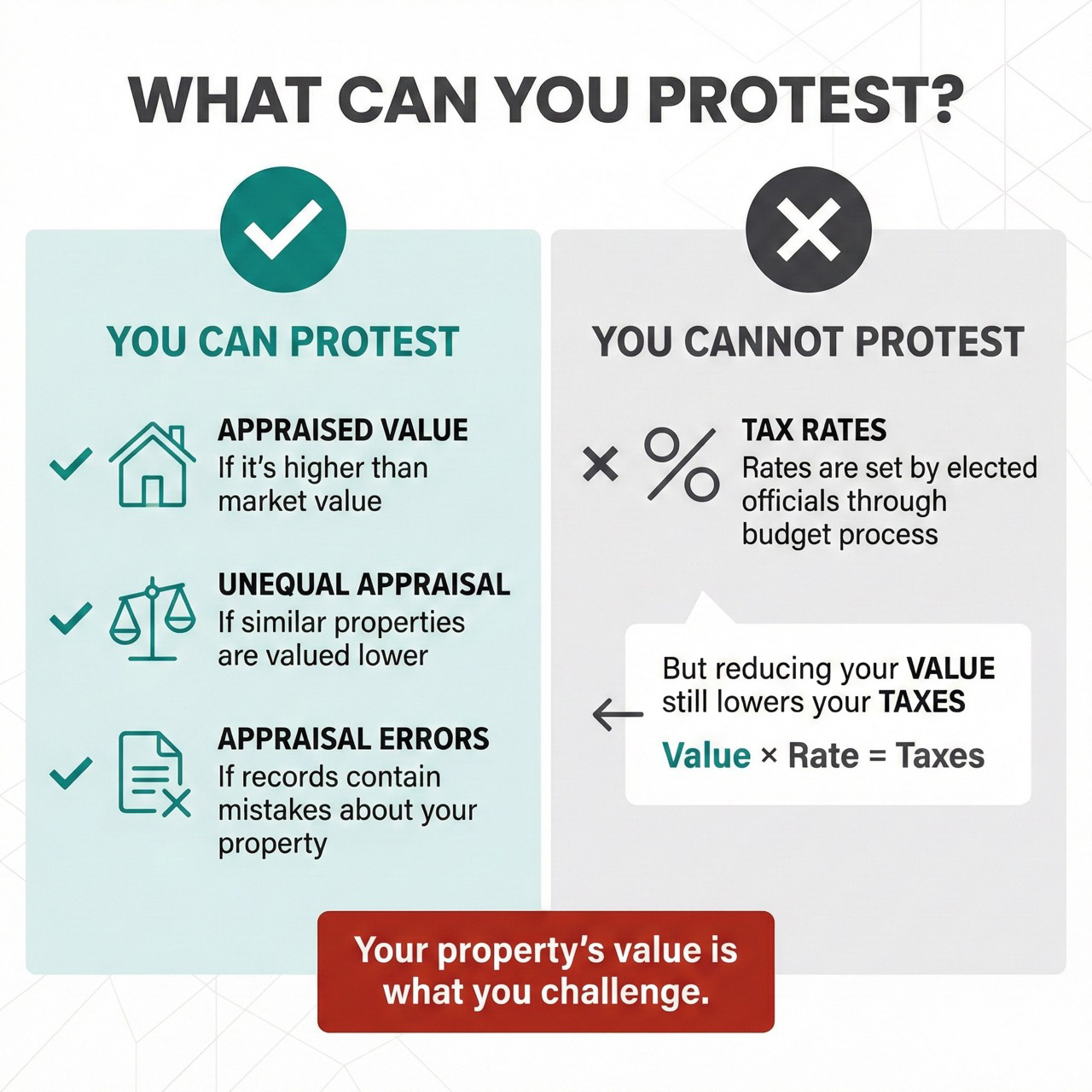
- Appraised Value: Determined by the CAD using mass appraisal methods. This is what you CAN protest.
- Tax Rate: Set by each taxing unit (school district, city, county, etc.) through their annual budget process. This is NOT part of the protest process.
Even though you can't protest rates, reducing your appraised value still lowers your taxes. Remember the formula: Value × Rate = Taxes. If your value goes down, your taxes go down—even if the rate stays the same.
The legal grounds for protest include:
- Your property's value is higher than market value
- Your property is appraised unequally compared to similar properties
- The appraisal records contain errors about your property
For a detailed explanation of what can and cannot be protested, see Tax Rate vs. Property Value: What Can Be Protested.
Who Can File a Protest
Texas law allows the following parties to file a property tax protest:
Property Owners
If you own the property, you have the right to protest its value. This includes individuals, trusts, estates, LLCs, corporations, and other entities. In some cases, lessees (renters) whose lease contract requires them to pay property taxes may also be entitled to protest.
Authorized Representatives
Property owners may authorize someone else to act on their behalf. This includes family members, attorneys, licensed property tax consultants, and property tax protest services. When using a representative, the property owner signs an authorization form (Appointment of Agent) allowing the representative to file protests, attend hearings, and make decisions on their behalf.
Many homeowners choose to work with a professional property tax protest service, like DomuTax. These services handle everything—from filing to evidence gathering to hearings—so homeowners don't have to worry about deadlines or paperwork. Most work on contingency, meaning you pay nothing unless they save you money.
One Protest Per Year
You can protest your property's value once per tax year. The protest covers the value as of January 1 of that year.
Protesting Cannot Increase Your Value
One of the most common concerns homeowners have is: "What if I protest and they actually RAISE my value?"
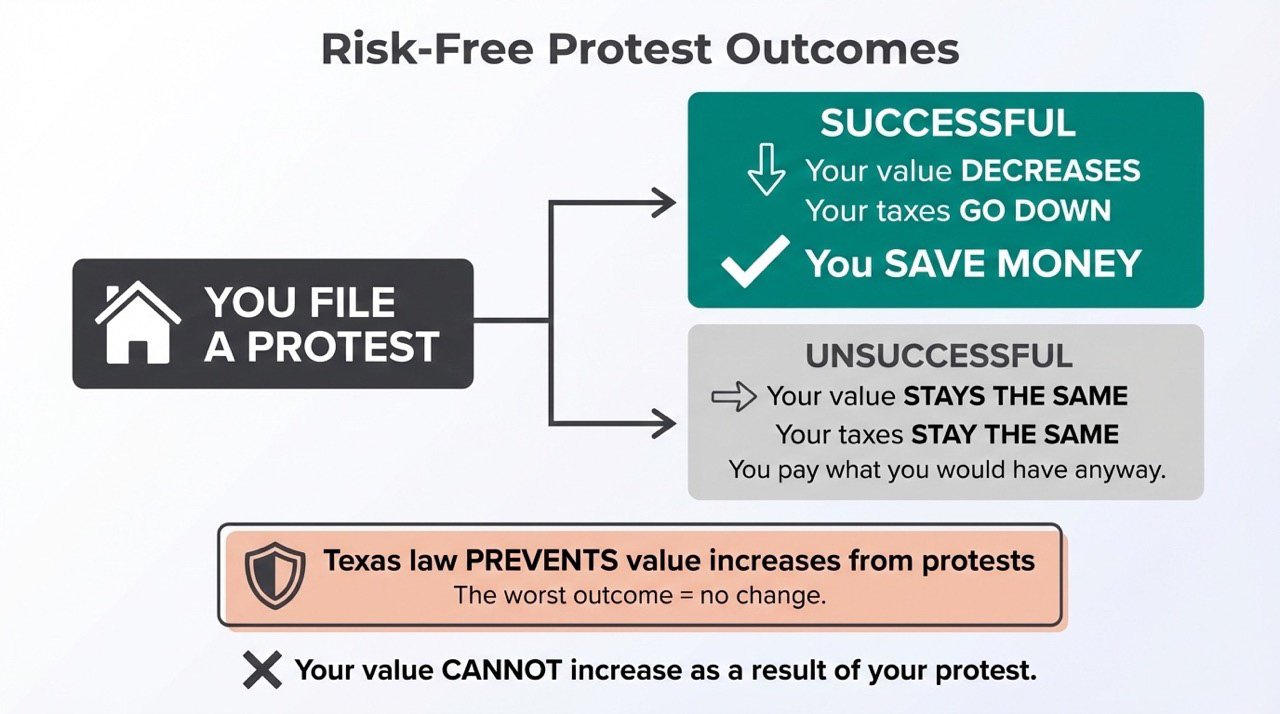
Texas law prevents this. According to the Texas Property Tax Code, the Appraisal Review Board (ARB) cannot increase your property's value above the amount determined by the appraisal district as a result of your protest. The worst outcome is that your value stays the same.
This protection makes protesting essentially risk-free:
- If successful: Your value goes down, you save money
- If unsuccessful: Your value stays the same, you pay what you would have anyway
Some homeowners worry about "getting on the appraisal district's radar" or facing retaliation in future years. In practice, this doesn't happen. Appraisal districts value millions of properties using standardized methods—they don't single out protesters for special treatment.
The Protest Deadline
The deadline to file a property tax protest is May 15 or 30 days after the appraisal district mails your Notice of Appraised Value, whichever is later.
Most homeowners receive their notices in April, giving them until May 15 to file. However, if your notice is mailed on April 20, for example, your deadline would be 30 days later (around May 20)—even though that's after May 15.
If you miss the deadline, you generally lose the ability to challenge your value for that tax year. The bottom line: when you receive your Notice of Appraised Value, act promptly.
For more details on the notice and its deadlines, see Notice of Appraised Value Explained.
What Happens When You Protest
Once you file a protest, the process usually unfolds like this. The exact timeline varies by county, but most follow this general pattern:
Most appraisal districts offer an informal review where you (or your representative) meet with an appraiser to discuss the value. Many protests settle at this stage if the evidence supports a reduction.
If the informal process doesn't resolve the protest, the case goes to the Appraisal Review Board (ARB)—an independent panel of citizens who hear both sides and make a decision.
Reduction: The value is lowered, resulting in lower taxes. No change: The original value stands. Settlement: You and the appraisal district agree on a value between the original and what you proposed.
ARB decisions are binding only for the tax year in question. Next year, the appraisal district will value your property fresh, and the process starts over.
Key Takeaways
- A property tax protest challenges your property's appraised VALUE—not tax rates
- It's a legal right for Texas property owners
- Protesting cannot increase your value—there's no downside
- The deadline is May 15 or 30 days after your notice is mailed (whichever is later)
- Many protests settle at the informal stage without a formal hearing
Take the Next Step
Understanding what a protest is and that it's risk-free is the first step. The next question is: how much could you save if your value were reduced? See Estimating Your Potential Savings to run the numbers—or let DomuTax handle everything for you.
DomuTax handles your entire property tax protest—from filing to negotiation to hearings. We take care of everything, and you pay nothing unless we save you money. Ready to see what you could save? Sign up at domutax.com.