The Document That Starts Your Protest Window
What your Texas Notice of Appraised Value means, how to read each section, key deadlines, and why this document matters for your property taxes.

Each spring, Texas homeowners receive an official notice that many toss aside or ignore—but this document could be the key to lowering your property taxes. The Notice of Appraised Value (NOAV) tells you what the appraisal district believes your property is worth, and this value will determine your property taxes for the year.
This notice is your trigger for action. It contains your protest deadline, and if you disagree with the appraised value, you must act before that deadline passes. Here's how to read your notice, understand what it means, and decide what to do next.
What the Notice Is (And Isn't)
Many homeowners confuse the Notice of Appraised Value with their property tax bill. They're different documents:
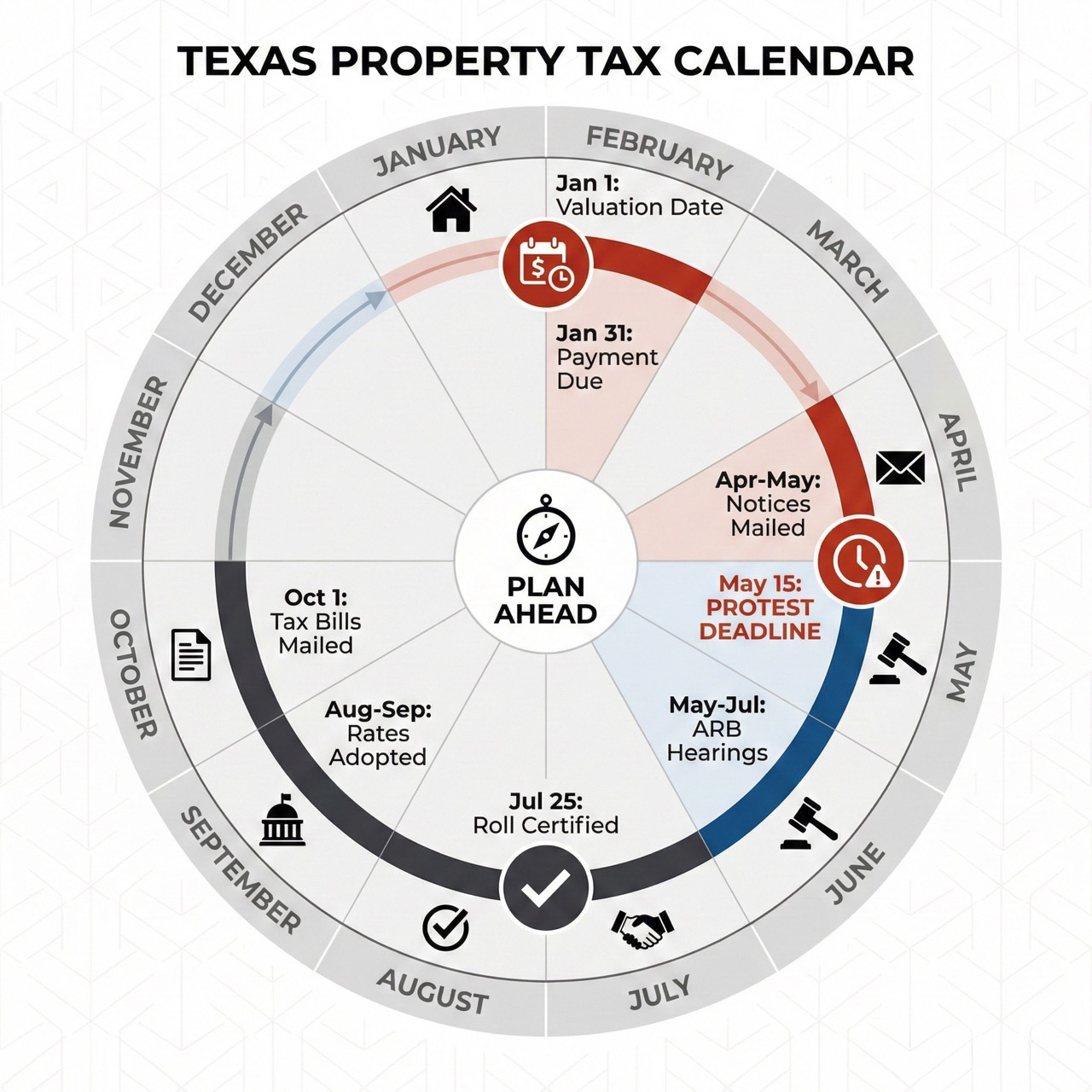
- Notice of Appraised Value: Arrives in spring (April–May), shows what your property is worth
- Property Tax Bill: Arrives in fall (October), shows what you owe
By the time you receive your tax bill, the protest period has closed. That's why paying attention to your NOAV—when it arrives in spring—is so important.
When the Notice Arrives
County Appraisal Districts typically mail Notices of Appraised Value in April and May. The exact timing varies by county:
- Some large counties (Harris, Dallas, Tarrant) mail notices in waves over several weeks
- Smaller counties may mail all notices at once
- New homeowners or properties with changed ownership may receive notices later
What If You Don't Receive One?
If you don't receive a notice, it doesn't mean your property wasn't appraised. Appraisal districts are required to mail notices for properties where values increased, exemptions changed, or ownership changed—but not necessarily for every property every year.
You can always look up your property's value on your appraisal district's website. If you believe your value is too high, you can file a protest even if you didn't receive a mailed notice—but you'll need to be aware of deadlines.
Key Sections of the Notice
While formats vary slightly by county, most Notices of Appraised Value contain the same key information.
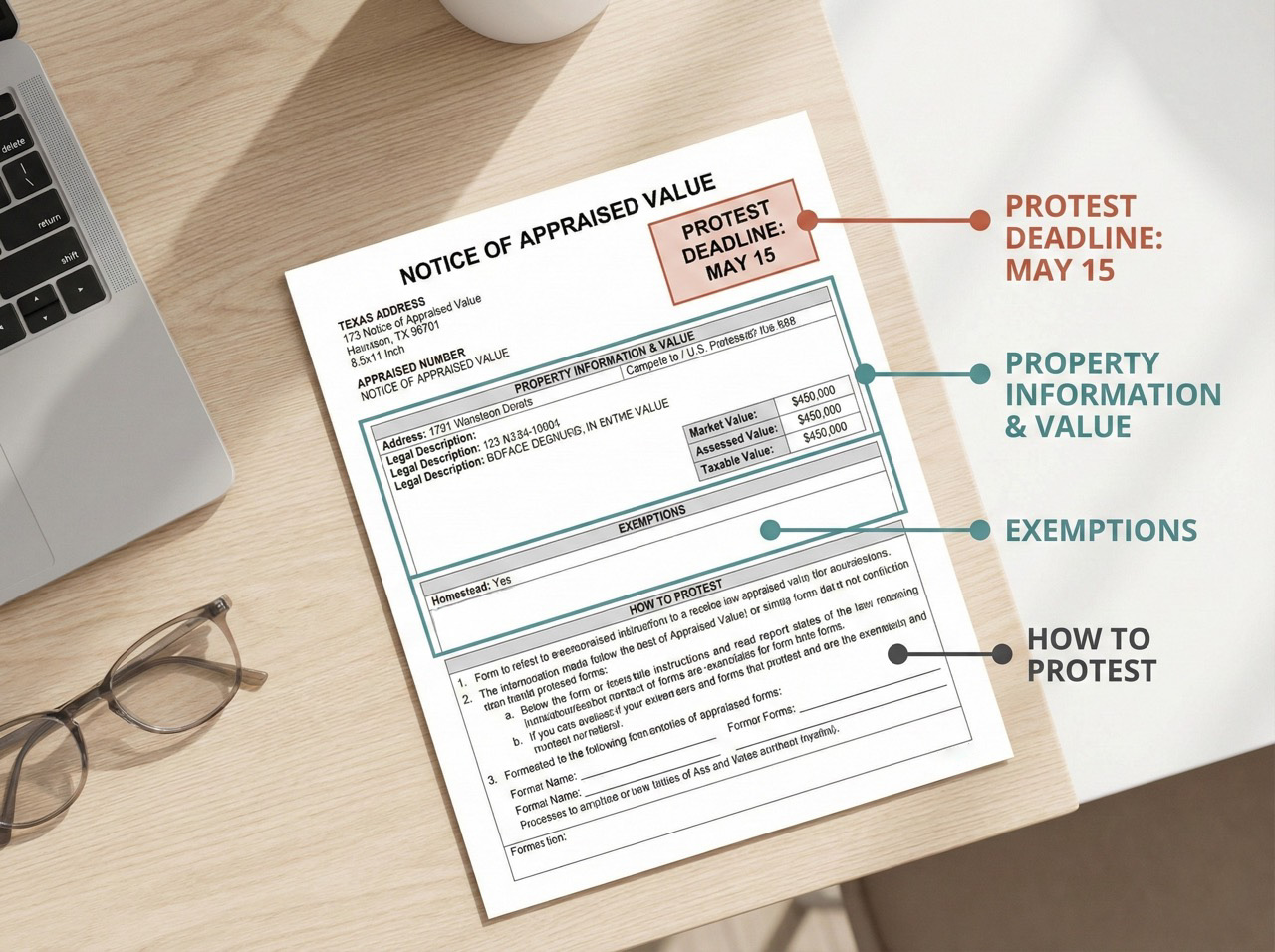
1Property Information
- Account number (your property's unique ID)
- Property address
- Legal description
- Owner name and mailing address
Verify this is correct. If the property details are wrong, it could indicate errors in your appraisal record.
2Value Information
Most notices show:
- Market Value: What the CAD believes your property would sell for
- Assessed Value: Market value limited by the 10% cap (if homesteaded)
- Taxable Value: Assessed value minus exemptions
The values shown are for the current tax year, based on market conditions as of January 1. Many notices also show the prior year's values for comparison.
For a detailed explanation of these values, see Market Value vs. Assessed Value vs. Taxable Value.
3Exemptions
The notice lists any exemptions applied to your property:
- Homestead exemption
- Over-65 exemption
- Disability exemption
- Other exemptions
Verify your exemptions are showing. If you applied for an exemption and it's not listed, contact the appraisal district.
4Protest Deadline — The Most Important Section
This is critical. The notice shows the deadline by which you must file a protest if you disagree with the value. This is typically May 15 or 30 days from the notice date, whichever is later.
5How to Protest
The notice includes instructions for filing a protest, including online filing options, physical address for in-person or mail filing, and phone numbers for questions.
The Protest Deadline on Your Notice
The most important date on your Notice of Appraised Value is the protest deadline.
The standard rule is: May 15 or 30 days after the notice is mailed, whichever is later.
Your specific deadline is printed on your notice. Look for language like "You must file your protest by [date]."
Why This Deadline Matters
Missing the deadline generally means you lose the right to challenge your value for that tax year. You'll be stuck with the appraised value shown on your notice—and the tax bill that comes with it.
What Counts as "Filed"
- Online: Must be submitted before midnight on the deadline
- Mail: Must be postmarked by the deadline
- In-person: Must be received by the appraisal district before they close on the deadline
Don't wait until the last minute. If you're going to protest, start the process as soon as you receive your notice. This gives you time to gather information, work with a protest service like DomuTax, if desired, and ensure your protest is properly filed.
Ready to protest? See What Is a Property Tax Protest? for next steps.
What to Do When You Receive Your Notice
Got your notice in the mail? Here's your action checklist:

1Verify Property Information
Make sure the property details match your actual property. Look for errors in square footage, number of bedrooms/bathrooms, lot size, and property type. Errors in property characteristics can lead to over-valuation.
2Review Values and Exemptions
- Did your market value increase significantly?
- How does it compare to what you think your home is worth?
- Is your assessed value being limited by the cap?
- Are all exemptions you applied for showing?
- If you turned 65 this year, is the over-65 exemption applied?
3Note the Deadline
Mark the protest deadline on your calendar. Once it passes, you can't protest for this year.
4Decide Whether to Act
If you believe your value is too high, don't wait—the deadline is firm. DomuTax can handle everything, ensuring your protest is filed correctly and on time so you can focus on what matters most.
Key Takeaways
- The Notice of Appraised Value is NOT your tax bill—it arrives months earlier
- It shows what the appraisal district thinks your property is worth
- The protest deadline on the notice is critical—miss it and you're locked in for the year
- Review the notice for accuracy when it arrives—check property details and exemptions
- Think your value is too high? Don't wait—deadlines are strict
Take Action Before Your Deadline
Just received your Notice of Appraised Value? DomuTax handles your entire property tax protest—we do the work, you keep the savings. Sign up before your deadline at domutax.com.