Reading Your Texas Property Tax Statement
A line-by-line guide to reading your Texas property tax statement. Learn what each section means, where your money goes, and how to spot errors.

That envelope arrives every October. You open it, scan the numbers, and wonder: Why is it this much? Where does it all go?
Your property tax bill shows exactly where your money goes. The trick is knowing how to read it. If you've ever stared at your tax bill wondering what all those line items mean, this guide will walk you through it section by section.
When Your Tax Bill Arrives (And What It Is)
Property tax bills are prepared and mailed by October 1 in Texas. You receive your bill from the county tax assessor-collector's office—the entity responsible for collecting taxes on behalf of all the taxing units in your area.
Many homeowners confuse two different documents:
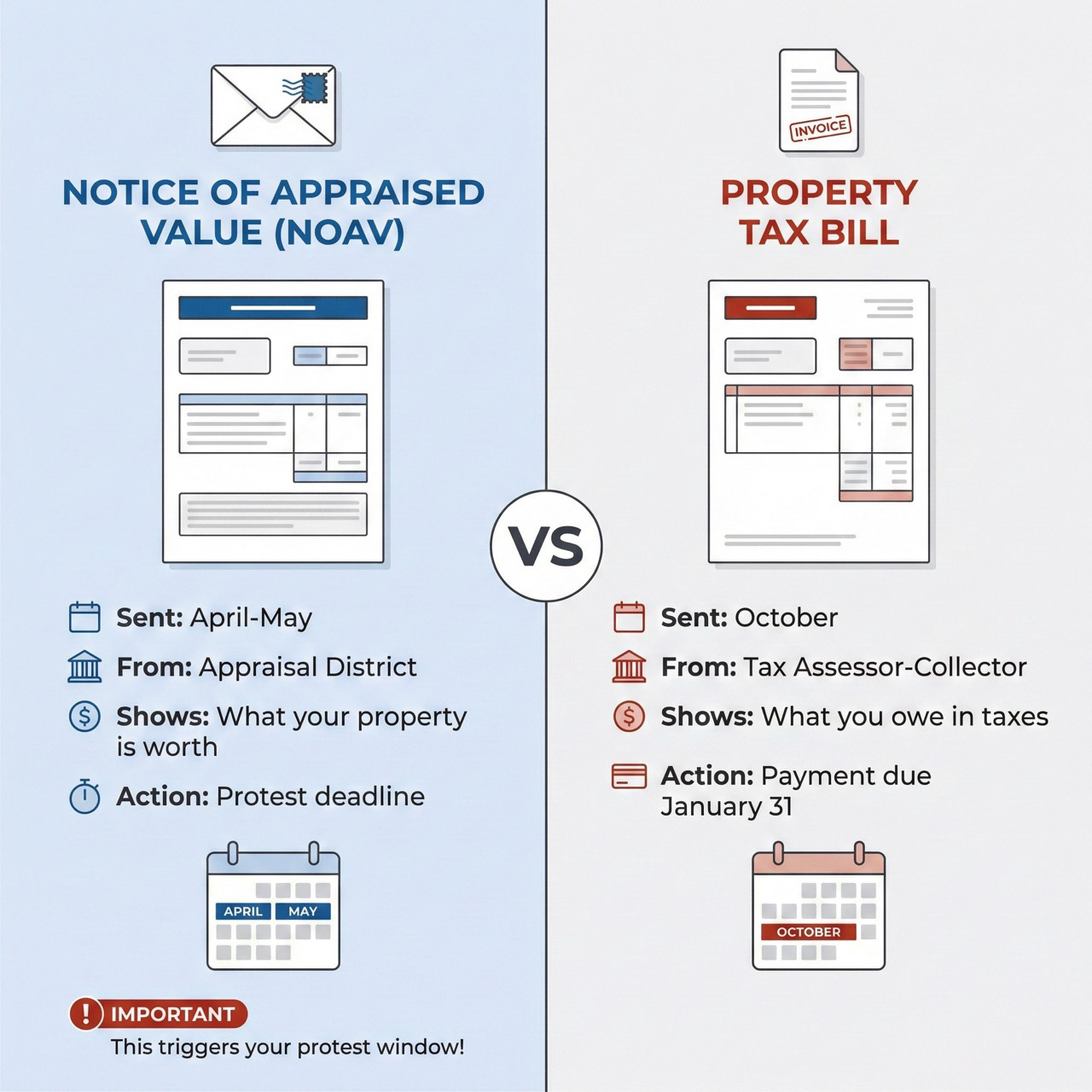
- Notice of Appraised Value (NOAV): Sent in spring (April–May) by the appraisal district. Shows what they think your property is worth. This document triggers your protest window.
- Property Tax Bill/Statement: Sent in fall (October) by the tax assessor-collector. Shows what you actually owe based on the certified value and adopted tax rates.
By the time you receive your tax bill, the values have been finalized and tax rates have been adopted. The bill is essentially an invoice for the current tax year.
To understand the spring notice and your protest rights, see Notice of Appraised Value Explained.
Key Sections of Your Tax Bill
While formats vary slightly by county, most Texas property tax bills contain the same core information. You can usually view your bill online through your county's tax assessor-collector website if you've misplaced the paper copy.
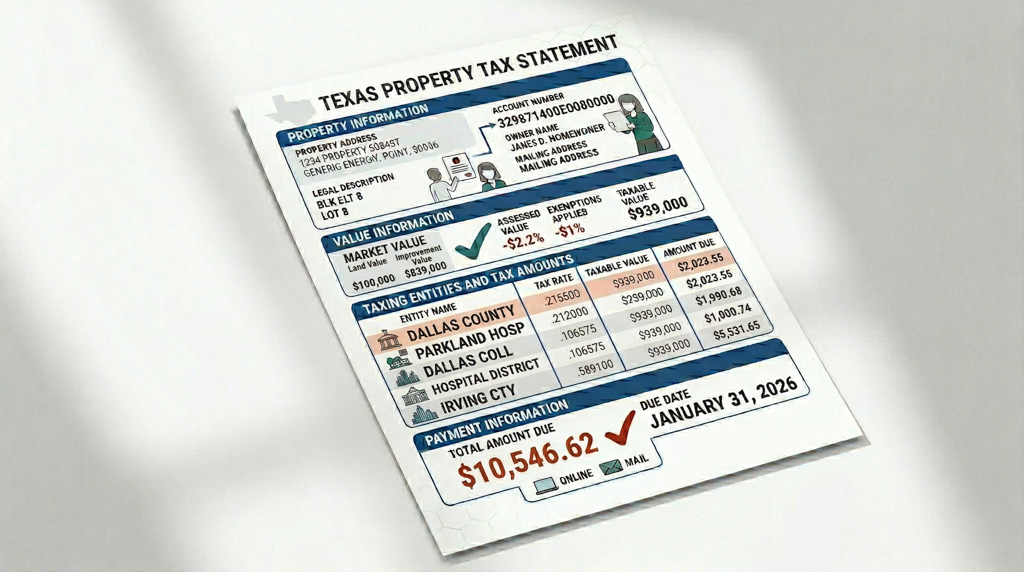
1Property Information
At the top, you'll find:
- Property address
- Legal description (lot and block numbers, subdivision name)
- Account number (your property's unique identifier with the appraisal district)
- Owner name and mailing address
Verify this is correct. Errors here could mean you're looking at the wrong property's bill.
2Value Information
Your bill may show:
- Market/appraised value
- Assessed value (if different due to the homestead cap, which limits annual increases to 10%)
- Exemptions applied
- Taxable value (the value actually being taxed)
Different taxing entities may show different taxable values because some exemptions apply only to certain entities. For example, the school district taxable value may be lower than the county taxable value if you have a homestead exemption (which provides a larger exemption for school taxes).
For a deeper explanation of these different values, see Market Value vs. Assessed Value vs. Taxable Value.
3Taxing Entities and Tax Amounts
This is the heart of your bill. Each row shows:
- Name of the taxing entity (school district, county, city, etc.)
- Tax rate (expressed per $100 of value)
- Taxable value for that entity
- Amount due to that entity
Your total tax bill is the sum of all these line items. If you've ever felt overwhelmed by all these numbers—you're not alone. To understand how these amounts are calculated, see How Property Taxes Are Calculated.
4Year-Over-Year Comparison
Many bills show how your taxes compare to the previous year, including the percentage change. This helps you see at a glance whether your taxes went up or down and by how much.
5Payment Information
The bill shows:
- Total amount due
- Due date (typically January 31)
- Payment options (online, mail, in-person)
- What happens if you pay late (penalties and interest)
Understanding the Taxing Entities on Your Property Tax Bill
Your property tax bill funds multiple local government entities. Each one funds different local services:
School District (Often 50% or More of Bill)
Funds public education including teacher salaries, school buildings, buses, and educational programs. Texas school districts rely heavily on property taxes because the state provides limited funding.
County
Funds county roads and bridges, sheriff's department, county courts, county jail, county parks, and county administration.
City/Municipality (Only If Within City Limits)
Funds city police, city fire department, city streets, parks and recreation, libraries, and municipal services.
Special Districts (Varies by Location)
- Hospital districts — Fund public hospitals and healthcare programs
- Community college districts — Fund local community colleges
- Water districts — Fund water infrastructure and flood control
- Emergency services districts — Fund EMS and fire services in unincorporated areas
- Municipal utility districts (MUDs) — Provide water, sewage, and drainage services; common in newer developments
Not everyone pays all of these. If you live in unincorporated county (outside city limits), you won't have a city line item. Your specific mix depends on your location.
For more detail on how property tax revenue funds local services, see How Property Tax Revenue Funds Local Services.
How to Spot Errors on Your Tax Bill
Errors are rare, but they do happen—and catching one could save you real money. A few things worth verifying:
Property Details and Exemptions
- Is the address correct?
- Is your name spelled correctly?
- Is this the right property? (Check the legal description if you own multiple properties)
- If you have a homestead exemption, is it showing?
- If you're over 65 or disabled, are those exemptions applied?
Values
- Does the appraised value match what was on your Notice of Appraised Value?
- If you protested and received a reduction, is the new value reflected?
Unexpected Changes
Did your taxes jump significantly without explanation? For instance, if your taxes increased 20% but your value only went up 5%, something may be off. Did an exemption disappear that you didn't expect to lose?
If You Find an Error
Contact your county tax assessor-collector's office. They can explain the bill and help correct legitimate errors. For value disputes, you may need to contact the appraisal district.
By October, the protest period has passed. If your value seems too high, make a note to act promptly next spring when you receive your Notice of Appraised Value.
Key Takeaways
- Your tax bill arrives in October and is due January 31
- Don't confuse this with your spring Notice of Appraised Value—they're different documents sent by different offices for different purposes
- Multiple taxing entities share your bill—school, county, city, and special districts—with schools typically taking the largest share
- Check your bill for accuracy—verify exemptions are applied and property details are correct
What's Next?
With your bill in hand and your exemptions verified, the next step is making sure you don't miss any deadlines. See Property Tax Payment Deadlines for everything you need to know about when to pay and what happens if you're late.