What a Licensed Property Tax Agent Does for Texas Homeowners
Licensed property tax agents represent homeowners at protests. Learn about TDLR requirements, fiduciary duties, and why licensing matters.

Not Just Anyone Can Represent You in a Property Tax Protest
When you hire someone to represent you in property tax matters, you want to know they're qualified. Texas law requires professionals who represent property owners for a fee to be licensed by the Texas Department of Licensing and Regulation (TDLR).
This licensing requirement exists to protect homeowners. It ensures that property tax consultants have demonstrated competence in property tax law, appraisal methods, and ethical standards.
DomuTax's team includes licensed property tax agents who meet all state requirements. This isn't just a credential — it's a commitment to professional standards that benefit our clients.
Texas Licensing Requirements
The Texas Department of Licensing and Regulation (TDLR) oversees property tax professionals in the state. The process isn't easy — and that's the point. Here's what it takes:
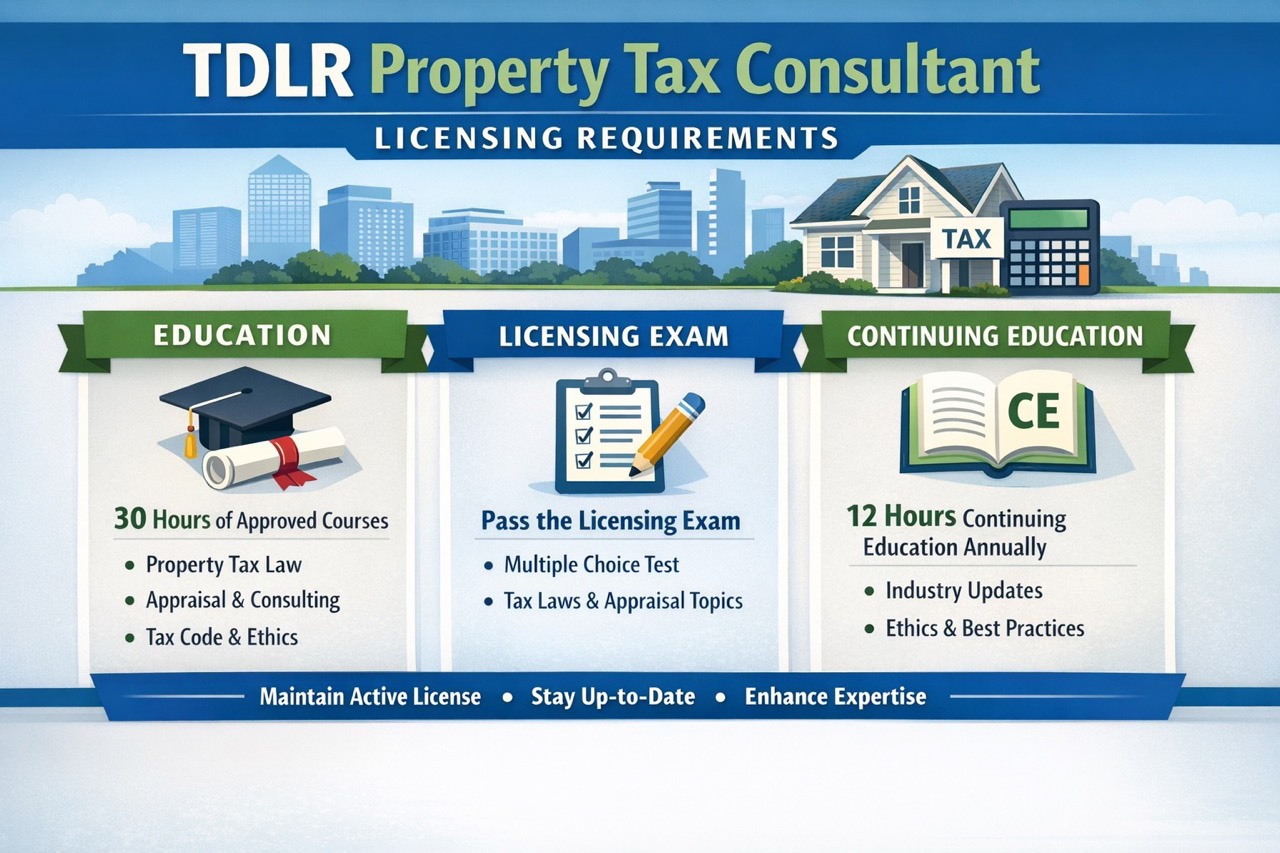
Property Tax Consultant Requirements:
To become a registered Property Tax Consultant, an individual must:
- Be at least 18 years old
- Hold a high school diploma or equivalent
- Complete 40 hours of pre-license education, including:
- 8 hours on laws and rules relating to property tax consulting
- 16 hours on appraisal and evaluation
- 8 hours on property tax consulting practices
- 8 hours on ethics
- Pass the TDLR-approved examination with a score of at least 70%
- Be sponsored by a Senior Property Tax Consultant
- Pay registration fees ($50 total)
Senior Property Tax Consultant:
A higher-level designation requires additional experience and qualifications. Senior Property Tax Consultants can sponsor other consultants and operate firms. DomuTax operates under Senior Property Tax Consultant oversight, ensuring experienced supervision of every case.
Exemptions:
These exemptions apply to professionals who already meet rigorous state licensing standards in related fields. Active Texas real estate brokers, salespersons, or licensed appraisers may qualify for a Property Tax Consultant registration with reduced education requirements (4-hour course instead of 40 hours) and no examination.
Continuing Education:
Licensed consultants must complete 24 hours of continuing education for renewal. Registrations must be renewed every two years after the initial one-year registration.
Why This Matters:
These requirements ensure that anyone representing you for a fee has demonstrated knowledge of Texas property tax law, appraisal methodology, and ethical standards. Not just anyone can do this — and that's exactly the point.
What Licensed Agents Can Do
A licensed property tax agent has full legal authority to act on your behalf in property tax matters. Once you sign an Appointment of Agent form (Form 50-162), your agent can:
- File your protest with all required documentation
- Represent you at hearings — both informal and ARB — so you don't need to be there
- Present evidence including comps, equity analysis, and property condition documentation
- Negotiate and sign agreements that are legally binding per Texas Property Tax Code Section 1.111(e)
- Receive all communications from the appraisal district on your behalf
This authority makes representation meaningful. Your agent isn't just an advisor — they're empowered to act with full legal effect.
Fiduciary Duties
When a licensed property tax agent represents you, they assume fiduciary duties — legal and ethical obligations to act in your best interest.

They Must Fight for Your Best Outcome
Fiduciary duty means your agent can't accept a quick, lowball settlement just to close your case. If the appraisal district offers a $400 reduction when the evidence supports $700, your agent is legally obligated to push for more. It's not optional — it's their duty.
Honest Communication and Confidentiality
Your agent must communicate honestly about your case's strengths, weaknesses, and likely outcomes. No false promises or misleading representations. And information you share with your agent about your property, finances, or situation must be kept confidential.
No Conflicts of Interest
Your agent cannot have interests that conflict with representing you effectively. Their job is to achieve the best result for you.
Accountability and Recourse
Licensed agents answer to TDLR. If they falsify documents, misrepresent results, or violate ethical standards, they can be disciplined or lose their license. And if something goes wrong, you have options — you can file a complaint with TDLR and have legal standing because your agent operated under regulated authority. With unlicensed operators? You may have no recourse at all.
What Fiduciary Duty Means in Practice
When your DomuTax agent negotiates with the appraisal district, they're obligated to fight for the best outcome — not settle quickly or easily. When they advise whether to accept a settlement or proceed to ARB, they're obligated to give you honest guidance. This isn't just customer service; it's a legal duty.
Why Licensing Matters for Homeowners
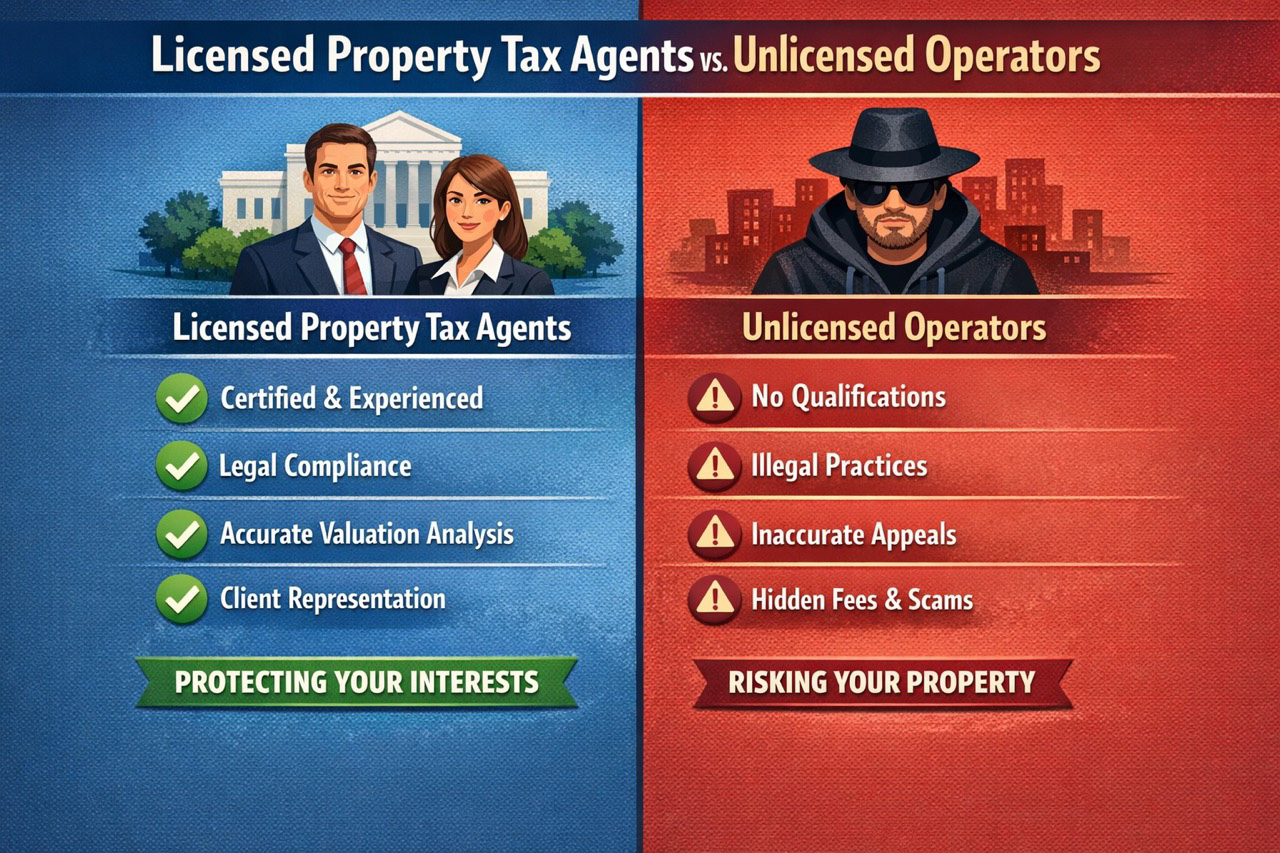
Licensing isn't just bureaucracy — it provides real protections for homeowners:
Verified Competence
Anyone can claim to understand property taxes. Licensing proves it. The examination and education requirements ensure your representative actually knows Texas property tax law and appraisal methods.
Legal Authority
Only properly licensed agents can legally represent you for a fee. Using an unlicensed individual could mean your protest isn't properly filed, agreements aren't valid, or you have no recourse if things go wrong.
Fraud Protection
Unfortunately, property tax fraud exists. Unscrupulous individuals sometimes pose as protest services, collect fees, and do nothing. Working with licensed professionals, like those at DomuTax, protects you from these scams.
Work with Licensed Professionals
When you work with DomuTax, you're represented by licensed property tax professionals who meet Texas state requirements and are bound by fiduciary duties to act in your best interest.
Here's what to remember: Texas requires licensing for property tax representatives who charge fees. Licensing ensures education, examination, and ethical standards. Licensed agents have legal authority to represent you fully, and fiduciary duties require agents to act in your best interest.
See how our licensed agents work for you.
Work with licensed professionals who are legally bound to fight for your best outcome. Sign up with DomuTax today.